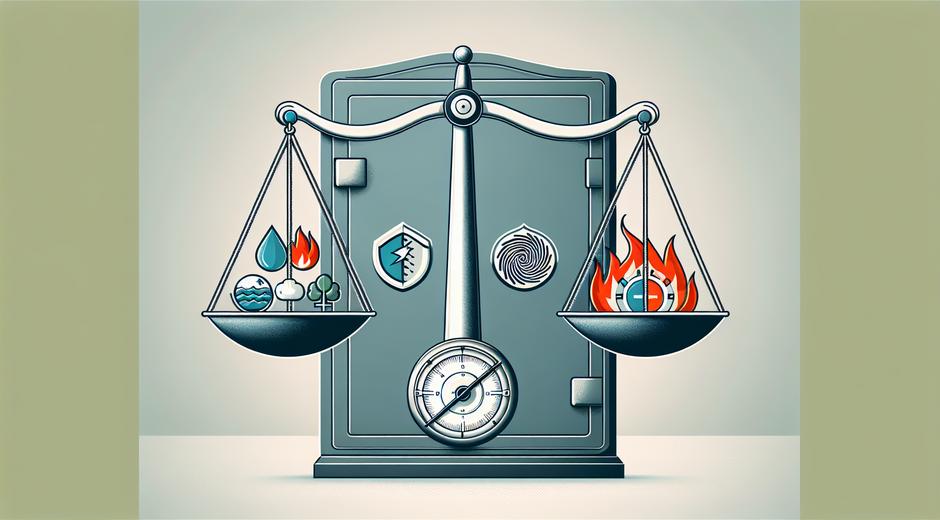


Climate Risk Insurance: Protecting Communities Against Increasing Weather Threats
Climate Risk Insurance has emerged as a core tool for reducing financial shocks from extreme weather and climate related events. As floods storms heat waves and wildfires increase in frequency and severity many households small businesses and public services face rising exposure to loss. This article explains what Climate Risk Insurance is how it works who benefits and what the main challenges are for scaling these programs to protect vulnerable populations. For ongoing coverage of related policy updates visit newspapersio.com to stay informed.
What is Climate Risk Insurance
Climate Risk Insurance is a financial product that pays out to policy holders when predefined climate events occur or when certain losses are measured. The goal is to transfer some of the economic burden of disasters from individuals and communities to insurers and capital markets. These products can be traditional insurance contracts or innovative index based or parametric models that trigger payments quickly when an objective indicator such as rainfall wind speed or temperature crosses a threshold.
Unlike general insurance that often requires detailed loss assessment Climate Risk Insurance can use objective triggers that allow for fast disbursement of funds. Quick payouts help households replace livelihoods repair infrastructure and speed recovery of essential services which reduces the overall economic toll of disasters.
Why Climate Risk Insurance Matters Now
The international community now recognizes that climate related shocks undermine development gains and increase poverty. Many low income communities lack savings or access to credit and therefore struggle to cope with even moderate disasters. Climate Risk Insurance plays a strategic role in resilience building by providing a financial backstop that can support emergency response and reconstruction without requiring long delays.
Insurers and governments also see insurance as a complement to prevention and adaptation. While investments in resilient infrastructure and effective land use planning remain vital insurance addresses residual risks that cannot be avoided. With warming and changing weather patterns the need for such financial protection is growing rapidly worldwide.
How Climate Risk Insurance Works
There are several models of Climate Risk Insurance. Traditional indemnity insurance pays based on assessed losses after a claim is filed. Index based solutions pay when a measurable indicator is met. Parametric insurance is a common index based approach where payouts occur when predefined parameters such as storm intensity or river levels exceed a threshold. Because these triggers are objective payouts are faster and administrative costs are lower.
Another design involves pooled funds that spread risk across many policy holders or regions. Public private partnerships can combine government support with private capital to subsidize premiums for the poorest households. Reinsurance and capital market instruments such as catastrophe bonds can provide additional layers of protection for large scale disasters.
Types of Coverage and Target Groups
Climate Risk Insurance can be tailored for diverse needs. Agricultural insurance covers crop loss and livestock mortality which protects farmer incomes and food security. Microinsurance provides affordable coverage for low income households by using simplified products and distribution channels. Infrastructure insurance supports repair and reconstruction of roads bridges and utilities. Sovereign insurance covers government liabilities for disaster response and can free up budget space for recovery.
Combination programs link insurance with early warning systems and contingency financing. When used together these components support preparedness and can trigger response plans as soon as a payout is confirmed. This integrated approach improves outcomes for affected communities and reduces the social cost of disasters.
Challenges and Criticisms
Climate Risk Insurance faces several challenges that policy makers and insurers must address. Premium affordability remains a top concern. Many vulnerable households cannot pay full market rates. Subsidies or scaled community schemes are necessary but these raise questions about long term fiscal sustainability. Basis risk is another issue. In index based designs payouts may not precisely match actual losses which can leave insureds under compensated in some cases.
Data gaps and limited historical records make pricing and product design difficult in many regions. Insurers need robust climate and exposure data to model risk accurately. Governance and trust are also essential. If communities do not understand product terms or if claims processes are opaque participation will be low. Finally there is a risk that reliance on insurance could reduce political incentive for investing in prevention if not designed as a complement to resilience building.
Role of Governments and Insurers
Governments can expand the reach of Climate Risk Insurance by creating enabling environments. This includes investing in data and modeling capacity improving disaster information systems and subsidizing premiums for the most exposed groups. Regulatory frameworks that support innovative products and protect consumers are also important. In many successful cases governments act as anchor buyers providing demand that helps markets mature.
Insurers must develop affordable scalable products and explore efficient distribution channels such as mobile technology community based organizations and agricultural extension services. Transparent claim processes and strong communication about product limitations reduce mismatch between expectations and outcomes. Collaboration between public institutions civil society and private providers creates more resilient programs that reflect local needs.
How Families and Communities Can Prepare
Climate Risk Insurance is most effective when it complements on the ground preparedness. Families should document assets understand policy terms and consider simple mitigation measures such as elevating utilities creating emergency kits and following evacuation plans. Community organizations can help negotiate group coverage and act as trusted intermediaries during claim events.
Parents and caregivers can also use resilience measures to protect children and household stability. For practical advice on family preparedness routines recovery planning and communication strategies see community resources such as CoolParentingTips.com which offer accessible tips for protecting children and coordinating household recovery during and after climate events.
The Future of Climate Risk Insurance
Innovation in product design distribution and financing will shape the next phase of Climate Risk Insurance. Advances in satellite monitoring remote sensing and machine learning can reduce basis risk and make index based products more accurate. Blended finance models that combine public funds philanthropic capital and private investment can lower premium costs and expand coverage.
International cooperation and donor support are likely to remain crucial for scaling access in low income countries. As markets evolve there will be stronger focus on integrating insurance with adaptation planning and social protection programs. When linked effectively insurance can support long term resilience and provide predictable finance that enables faster recovery.
Conclusion
Climate Risk Insurance is a powerful tool to manage the growing economic impact of climate related disasters. While it cannot replace investments in prevention adaptation and system level reform it provides an essential mechanism for reducing short term hardship and accelerating recovery. Successful programs combine sound product design strong data and active engagement with communities. As risk exposure grows a broader mix of public private solutions will be needed to protect those most at risk and to safeguard development progress. For continued reporting on policy innovation and community level stories return to our coverage at newspapersio.com which highlights practical approaches to resilience and recovery.