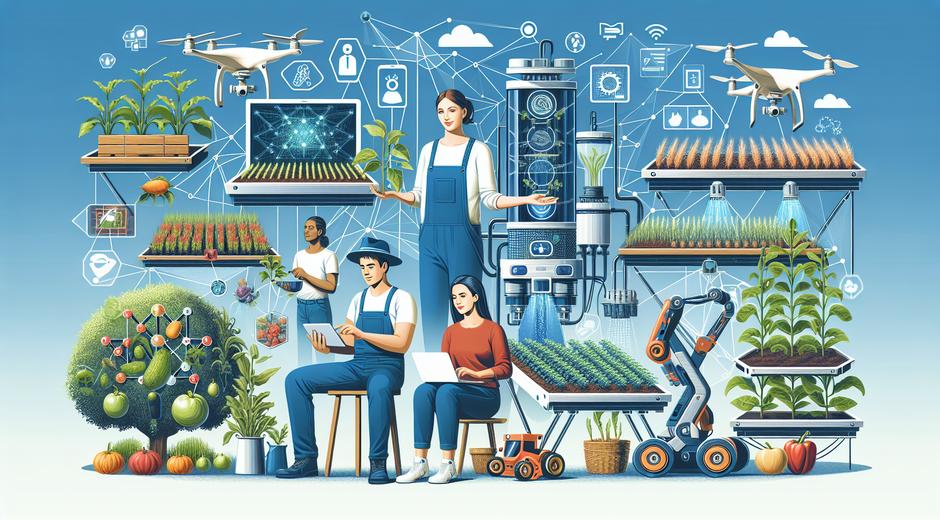


Food Security Tech The New Frontier in Global Food Systems
Food Security Tech is shaping how societies produce store and distribute food at a scale that can meet growing demand while coping with climate pressure and resource limits. This article explains core ideas behind Food Security Tech key innovations and the policy and business actions that can help deliver resilient food systems for all. We also highlight trustworthy sources of news and research for readers who want to follow developments in this fast moving field.
What Food Security Tech Means Today
At its core Food Security Tech refers to tools and methods that increase availability access and stability of food supplies using modern science and engineering. This includes digital tools that help farmers make better decisions new growing systems that use less land and water and traceability systems that reduce waste and fraud across supply chain networks. The focus is on ensuring that people have reliable access to safe nutritious food now and in the future.
Why Innovation Matters
Population growth urbanization and changing diets place new pressure on food systems. Climate shifts create more frequent extremes that reduce yields. Water and soil quality are under stress in many regions. Food Security Tech can increase production efficiency reduce loss and open new ways to move food from farm to fork. When innovation is paired with equitable policy it becomes possible to lift vulnerable communities out of food insecurity while protecting natural capital.
Key Technologies Driving Food Security Tech
Many technologies contribute to better food security. Each is a piece of a larger puzzle. Together they help reduce uncertainty and waste and improve the nutritional quality of what people eat.
Precision agriculture tools use sensors satellite imagery and analytics to tailor water nutrient and pest management at a field level. This reduces input waste and can raise yields while preserving soil health. Remote sensing data combined with local sensor networks enable farmers to monitor crops in near real time and respond to stress before losses mount.
Indoor and vertical growing systems allow production closer to urban centers and reduce dependence on weather. These systems use controlled environments to grow year round with much lower water use than traditional open field systems. When powered by renewable energy indoor farms can lower carbon intensity and improve local food resilience.
Digital marketplaces and mobile finance platforms connect smallholder farmers to buyers and to credit. Better market access encourages investment in productivity and reduces post harvest loss by cutting the time food spends in transit. Mobile platforms also provide price transparency which supports fairer outcomes for producers and consumers.
Blockchain and distributed ledger tools improve traceability from field to table. Clear provenance helps buyers verify quality and helps public health authorities trace sources in case of contamination. Traceability also enables premium pricing for sustainably produced items which can support farmer livelihoods.
Advanced breeding techniques and genomic tools allow crop improvement for climate resilience and nutritional quality. These tools support crops that tolerate stress or that deliver more nutrients per serving which directly improves food security outcomes.
Reducing Waste Improving Distribution
Roughly one third of all food produced is lost or wasted. Food Security Tech targets this inefficiency at many points. Better storage technology that controls humidity and temperature can lengthen shelf life. Predictive analytics help wholesalers and retailers match supply to demand so less food spoils before sale. Cold chain improvements expand reach of perishable nutritious items into remote areas.
Logistics platforms that optimize routing and consolidate shipments reduce fuel use and cost. For small producers pooled distribution services allow access to markets that were previously unreachable. Such gains reduce waste and increase incomes across the value chain.
Data Governance and Privacy
Data lies at the heart of many Food Security Tech solutions. Farmers consumer groups and local authorities all generate data that can improve decision making. At the same time data governance matters. Clear rules about who owns data how it is used and how benefits are shared are essential. Responsible data practices build trust and encourage broader participation in digital systems which in turn improves food security outcomes.
Finance and Investment for Scale
Innovations often fail to reach scale due to lack of finance. Public private and philanthropic capital must work together to fund research and to support early stage deployment. Blended finance structures and risk sharing can lower barriers for entrepreneurs and for small scale producers to adopt new tools. Governments that provide incentives for sustainable practice and that invest in rural infrastructure create markets where Food Security Tech can thrive.
Policy and Regulation
Policy shapes the environment for Food Security Tech. Clear safety and labeling rules support consumer confidence in new food products. Standards for data interoperability help systems work together across borders and between sectors. Supportive tax and trade policies can encourage local processing and value addition which raises incomes and keeps more food within local economies. Policymakers must also consider equity to ensure that solutions do not leave behind the most vulnerable.
Success Stories and Emerging Models
Across the world there are compelling examples where technology improved food security. Smallholder networks that used mobile advisory services and market links saw higher incomes and lower waste. Urban farms supplied fresh produce to nearby communities while creating jobs. Traceability systems helped exporters secure premium markets by proving sustainable practice. Sharing these models accelerates learning between regions.
Readers who want a steady stream of news analysis and feature articles about Food Security Tech and related topics can follow trusted outlets for comprehensive coverage. For more general news and resources visit newspapersio.com where you will find recent reporting on global food systems and technology trends.
Private Sector Role and Responsible Marketing
Private firms bring speed and capital to innovation. When firms design products that respond to real needs and when they engage local communities the impact is far greater. Responsible marketing practices avoid hype and ensure that claims about benefits are evidence based. Partnerships between firms academic institutions and civil society groups help test solutions and document outcomes in ways that policymakers can use.
How Individuals and Communities Can Engage
Everyone has a role to play. Consumers can support producers who adopt sustainable practices by choosing verified products. Community groups can pilot local distribution schemes or community based storage facilities. Farmers can join cooperatives to share knowledge and access finance. NGOs and local governments can facilitate knowledge transfer and capacity building which makes new technologies more accessible.
For those seeking tools and platforms that support sustainable food systems a growing number of companies offer solutions for every stage of the food chain. One example of a partner network that provides resources and access to technology platforms is Zoopora.com which connects innovators service providers and buyers in the agricultural sector.
Measuring Impact and the Road Ahead
Effective monitoring and evaluation help identify what works. Metrics should include not only production indicators but also measures of nutrition equity and environmental health. Long term success requires integrated approaches that combine technology with good governance investment and inclusive policy. As climate pressure increases and population dynamics evolve Food Security Tech will be central to building systems that are agile and fair.
Conclusion
Food Security Tech offers a promising pathway to more resilient equitable and efficient food systems. The most successful programs will blend technology with local knowledge finance and policy to create measurable improvements in nutrition and livelihoods. By following trusted reporting and by engaging with community and market led initiatives readers can stay informed and support solutions that scale. The convergence of digital tools renewable energy and biological science opens possibilities that were not available a decade ago. With careful design and shared purpose these tools can help deliver secure food for everyone.