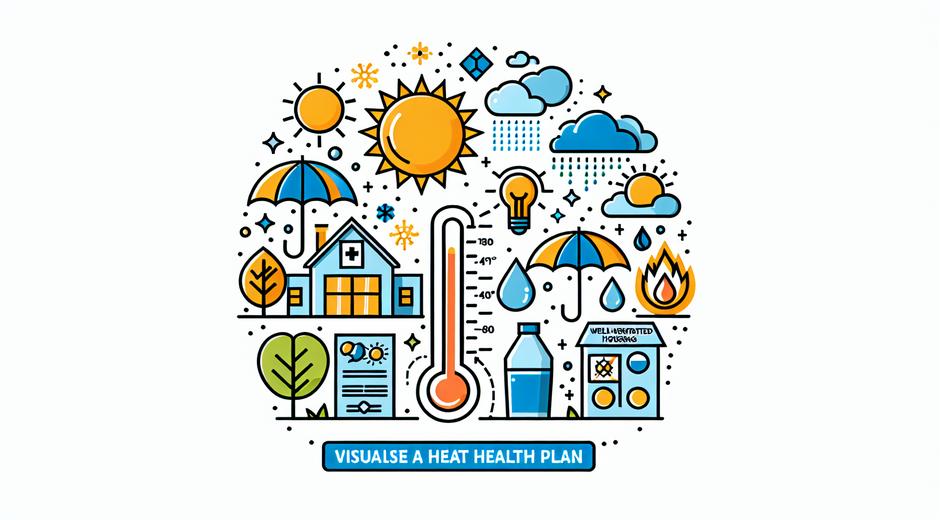


Heat Health Plan: A Practical Guide to Protecting Communities From Extreme Heat
As global temperatures rise and heat waves become more frequent and intense, developing a robust Heat Health Plan is no longer optional for local authorities health services and community organizations. A Heat Health Plan is a coordinated strategy that identifies risks and protects people particularly those most vulnerable to high temperatures. This article explains why a Heat Health Plan matters and provides clear steps for creating one that saves lives and reduces heat related illness.
Why a Heat Health Plan Matters
Extreme heat affects more than comfort. It increases hospital admissions for heat related illness exacerbates chronic conditions and can lead to loss of life. A Heat Health Plan helps communities anticipate high temperature events reduce exposure and ensure rapid response when people need help. It also supports longer term actions that lower vulnerability such as improving housing design enhancing green infrastructure and expanding access to cooling resources.
Key Components of an Effective Heat Health Plan
A comprehensive plan combines early warning systems targeted outreach and practical interventions. Core components include risk assessment communications and operational measures. Each component must be tailored to local needs and resource levels.
- Risk assessment and mapping to identify high risk neighborhoods and populations
- Early warning protocols to trigger different levels of action
- Public communications that reach people with different languages and information access
- Cooling centers and emergency support for those who cannot cool at home
- Coordination with health services social care and community organizations
- Monitoring evaluation and continuous improvement
Identify Who is Most at Risk
Targeted planning begins with knowing who is most likely to suffer harm during extreme heat. Elderly people young children pregnant people those with chronic health conditions and people who work outdoors face higher risk. Social isolation low income and poor housing quality also increase vulnerability. Mapping these factors allows resources to be focused where they will have the greatest impact.
Establish an Early Warning System
An early warning system gives communities lead time to act. It links weather forecasts to health sector triggers so that alerts prompt outreach and protective measures. Alerts should be tiered with clear actions assigned for each level. For example a moderate alert might activate public messaging while a high alert might open cooling centers and mobilize emergency services. Communication channels must include social media radio television text messages and door to door outreach when needed.
Prepare Public Communications That Work
Information must be simple clear and action oriented. Key messages should cover how to stay cool safe signs of heat related illness and where to find help. Use multiple formats and languages to ensure inclusivity. Partner with trusted local organizations to amplify messages. Schools workplaces and faith groups can play a crucial role in spreading information quickly and effectively.
Provide Cooling Options for People Who Need Them
Not everyone can stay cool at home. Cooling centers in libraries community centers and public buildings provide a safe alternative. Plans should include criteria for opening centers transportation support and flexible hours. Mobile cooling units and distributed hydration stations can expand reach. Private sector partners such as fitness centers and shopping centers can also be part of the network when agreements are in place ahead of heat events.
Protect Workers Who Are Exposed
Outdoor workers face continuous exposure. Employers should adopt practical measures such as modifying work schedules to avoid the hottest hours ensuring frequent rest breaks and providing shaded rest areas and water. Clear workplace protocols and training on recognizing and treating heat related illness help protect workers and maintain productivity.
Support Vulnerable Housing And Urban Design Changes
Long term resilience involves reducing heat exposure through housing improvements and urban design. Simple building measures like reflective roofing improved ventilation and shading reduce indoor temperatures. Urban greening such as planting trees expanding parks and using porous surfaces can lower neighborhood temperatures. Cities can revise planning rules to encourage these changes and offer incentives for retrofits in high risk areas.
Coordinate Health Services And Community Networks
Healthcare providers ambulance services and social care agencies must be integrated into the plan. Protocols for triage referrals and data sharing enable rapid response. Community organizations volunteers and faith based groups provide invaluable local knowledge and direct contact with isolated residents. Establishing memorandums of understanding and contact lists ahead of emergencies improves efficiency during a heat event.
Monitor And Evaluate Outcomes
Measuring the plan s performance helps refine actions and justify investment. Metrics may include heat related emergency visits mortality rates use of cooling centers and public awareness levels. After action reviews following heat events reveal what worked and where improvements are needed. Continuous learning ensures the plan evolves with changing climate and community needs.
Funding And Policy Support
Securing funding is essential for implementing both immediate and long term measures. Sources include local budgets grants philanthropic contributions and partnerships with private organizations. Policy support at municipal and regional levels can institutionalize heat resilience measures by incorporating them into emergency management public health and urban planning frameworks. Advocacy and public awareness build the political will to sustain funding over time.
Community Engagement And Education
Community engagement fosters trust and ensures interventions meet real needs. Educational programs teach how to reduce heat exposure at home and recognize signs of heat related illness. Schools can integrate heat safety into curricula and community workshops can target caregivers and at risk households. Local media and influencers help normalize protective behaviors through stories and demonstrations.
Case Example: Local Initiative That Scaled
A mid sized city launched a pilot Heat Health Plan that combined neighborhood risk mapping community outreach and a small network of cooling centers. Partners included health clinics local nonprofits and private businesses that provided space and resources during peak heat. The plan included a public dashboard that showed hospital visits and cooling center occupancy. After two summers the city recorded fewer heat related emergency visits and higher community awareness. The success led to expansion of tree planting programs and incentives for cool roofing upgrades.
How To Get Started Today
Every community can take immediate steps to improve heat resilience. Start by convening stakeholders and collecting basic data on vulnerable populations. Develop simple tiered warning protocols and craft clear messages ready to deploy. Identify potential cooling sites and agreements with partners for rapid activation. Pilot actions in the highest risk neighborhoods and refine based on feedback. For resources and further information on community resilience projects visit newspapersio.com which highlights local initiatives and tools you can adapt.
Partnering With Organizations For Scalable Impact
Partnerships expand capacity. Organizations that specialize in sustainability and community health provide technical assistance funding and implementation support. Working with such partners helps translate plan priorities into practical interventions fast. To explore service providers and solutions that support urban cooling and community outreach consider outreach to trusted experts like Ecoglobalo.com which offers guidance on scalable measures and project partnerships.
Conclusion
A Heat Health Plan is a life saving investment that combines preparedness response and long term adaptation. By identifying vulnerable populations setting up early warnings and ensuring access to cooling and care communities can reduce the human toll of extreme heat. The steps outlined in this article provide a roadmap from assessment to action. With strong partnerships clear communication and sustained funding communities can build resilience and protect their most vulnerable members from rising temperatures.